Add a thought. Keep moving.
Queue a follow-up while a task is still running, and keep talking once it stops. The whole thread of a job stays in its project.
 Claw Fleet
Your personal AI workspace.
One workspace for Claude Code, Codex and DeepSeek Harness. Work moves by project, the material is in front of you when a call is yours to make, and what gets made stays where you can find it.
Download Claw FleetSee how it runs Free & open source. Bring your own AI tools and accounts.
Pick a project and an AI tool, attach the material, say what you want done. Whatever you think of later stays in the same workspace.
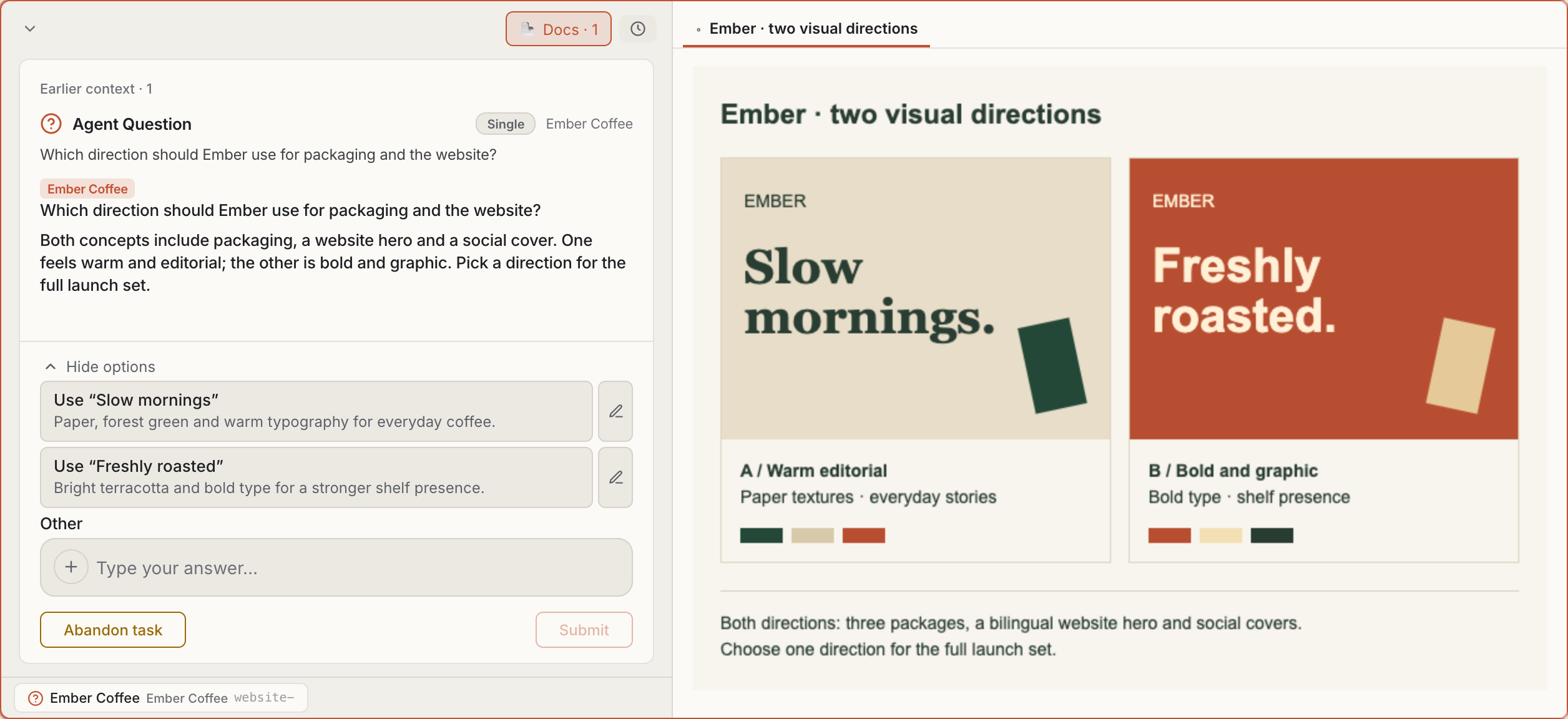
A proposal, an image, a document — see it clearly, then decide the next step. Every question stays attached to the work it came from.

A handoff carries the plan, the step it stopped on, and what the last session left behind. Whoever picks it up starts at P3 instead of asking again.
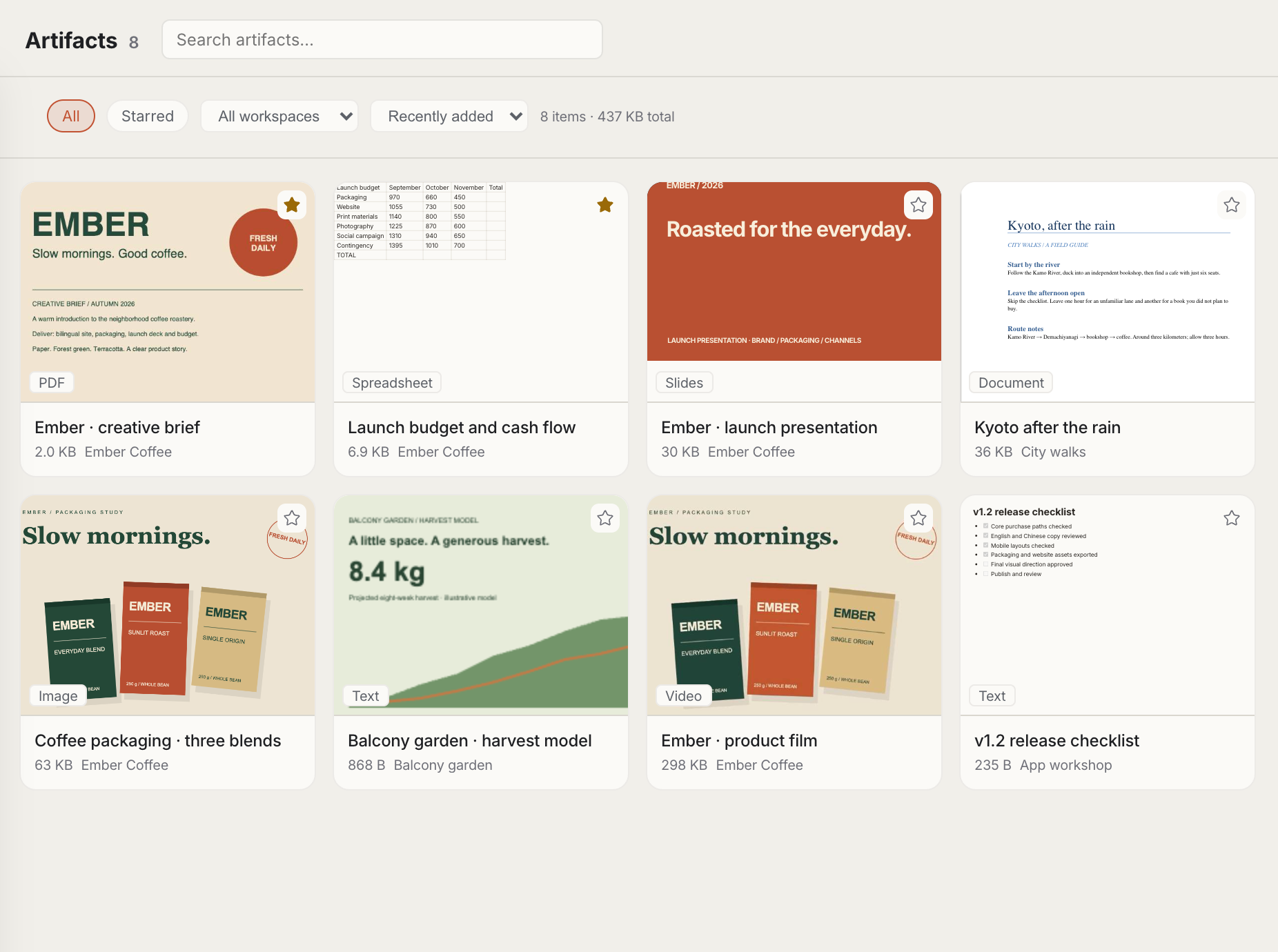
Browse deliverables by project, with documents and media previewed in place. Leave a note, star one, or export the file and take it with you.
Current interface · Illustrative data
The project, the conversation, the next decision, and what came out of it.
Queue a follow-up while a task is still running, and keep talking once it stops. The whole thread of a job stays in its project.
The proposal, image or document an agent brings back sits on the card that asks for your call. No digging through the transcript first.
Open a deliverable, export it, come back to it weeks later. Conclusions worth reusing go into a versioned project wiki.
Planning, implementation and review can go to different tools. You decide who takes which step.
The split is only an example. Every task picks its own tool and model; name another tool’s model in a handoff and the next session runs there.
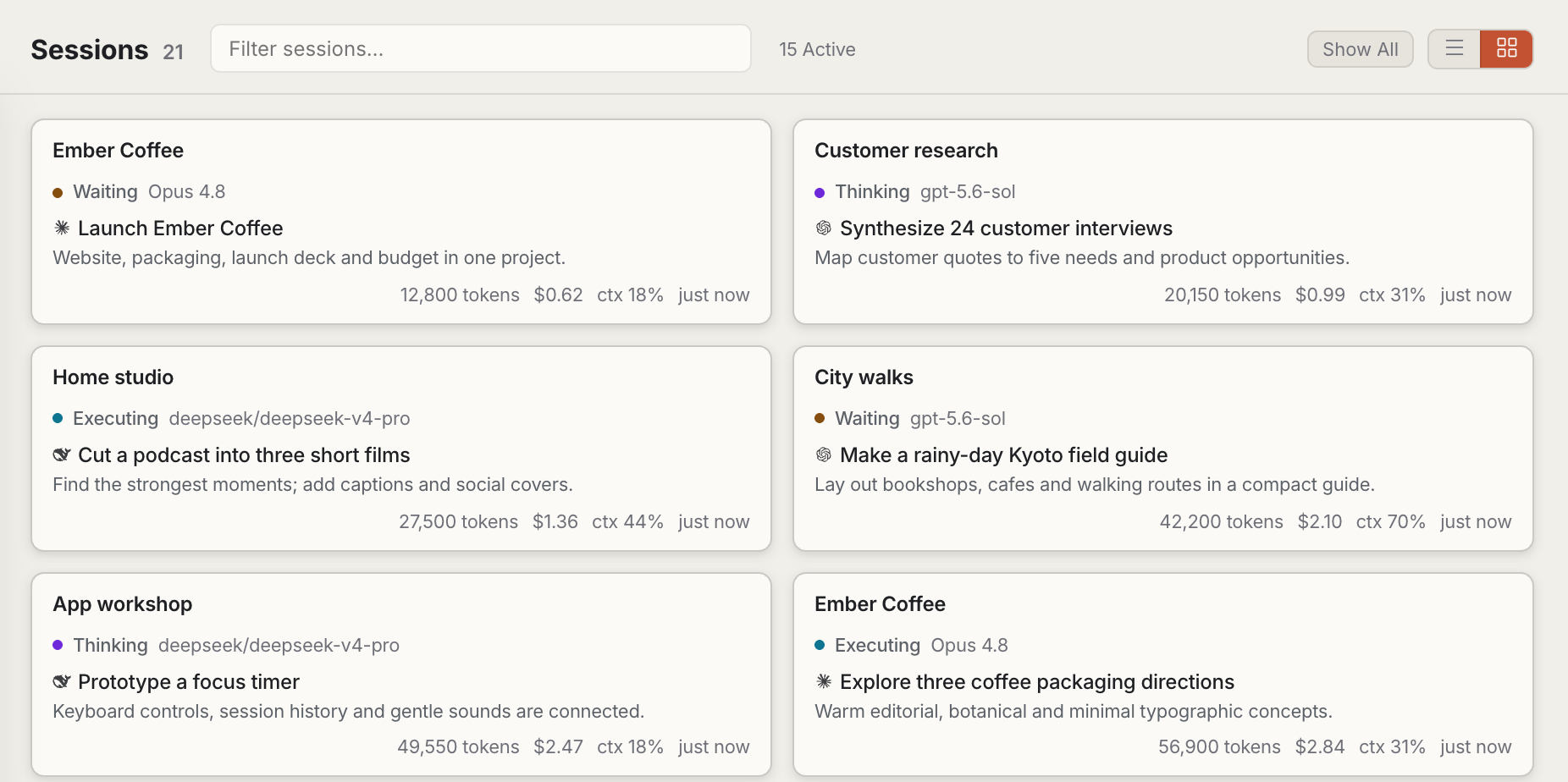
Current interface · Illustrative data
Choose the agent tool when you brief the task, then pick a model from that tool’s own catalogue. When several are running, the session list shows which tool each task is on.
The workspace, the plan and its current step, and the notes the previous session left behind all travel to the next one. Whoever picks it up doesn’t rebuild the context.
Plans, the project wiki, deliverables and notes live in Fleet, not inside one tool. What Claude Code writes down, Codex and DeepSeek Harness can read back.

Current mobile interface · Illustrative data
An idea doesn’t have to wait until you’re back at your desk. Hand out work from your phone — pick the project and the machine that runs it — and come back when a call is yours to make.
When there is more of it, and it runs longer, the workspace keeps up.
Tasks sit with their workspace. The file tree, Git and a command runner are right there when you need a closer look.
Pull up an earlier report, compare versions, and cite its conclusions straight into the next task.
Long tasks run as plans, and a handoff brief lets someone else pick them up. Recurring work goes on a schedule, or waits for a condition to be met.
Claude Code, Codex, and DeepSeek Harness
Use the tools and models you already have. DeepSeek Harness connects to the model providers you configure; all three keep their own accounts and quotas.54 capabilities, grouped by how you use them. Open a section when you need it.
Use Claude Code, Codex and DeepSeek Harness in one workspace.
Choose an available model, reasoning effort and permission mode.
Attach source material and reference images to a brief.
Add another instruction without waiting for the task to finish.
Move between tasks while keeping each conversation in place.
Find previous work by title, plan or conversation text.
Pick Claude Code, Codex or DeepSeek Harness when you brief a task, then a model from that tool.
Name another tool's model in a handoff and the next session runs there.
A handoff can carry the plan and the step it stopped on.
A successor session can read the notes its predecessors left behind.
A report one tool publishes is what the next tool reads back.
When several tools are running, the session list marks which one each task is on.
See multiple sessions and their current states together.
Distinguish thinking, tool execution, output and waiting for input.
Inspect thinking, tool calls and code changes.
Follow parent sessions, subagent work and workflow relationships.
Take control of a stuck or no-longer-needed session.
Rename, mark and filter sessions to keep useful work easy to find.
Handle questions, permissions and plan approvals together.
Review documents, images and HTML previews alongside a decision.
Use single choice, multiple choice, free text and form fields.
Review risk analysis before supported commands run.
Read and edit a proposed plan before approving it.
Keep questions, choices and feedback for later review.
Track phases and keep the plan with the work.
Start a successor session with a handoff brief.
Trace the sessions that carried a piece of work forward.
Start a task at a specified time.
Repeat checks or routine work on a schedule.
Wait for an event and run the agent only when the condition is met.
Preview PDFs, Office files, images, video and web documents.
Download finished files or hand them to someone else.
Organize deliverables without relying on filenames alone.
Keep reusable HTML reports and Markdown documents.
Search full text and reference conclusions across documents and sessions.
Update a document while keeping earlier versions available.
Browse project files, images and source code.
See the branch, ahead/behind counts and changed files, then pull or push from the interface.
Run commands and inspect terminal output and process state.
Connect projects and agent environments on another machine.
Run Fleet Web UI on your own always-on machine.
Pair a phone with desktop Fleet and switch between devices.
See supported account quotas and reset windows.
Review per-session consumption and estimated totals.
Watch output speed and changes in spend.
Summarize sessions, output and work that needs attention.
Review executed commands by risk category.
Check installation, versions, sign-in and tool availability.
Inspect skills and synchronize them across supported tools.
Browse, install and manage plugin sources.
Inspect project memory, revision history and rule scope.
Start tasks, add instructions and answer decisions from a phone.
Turn speech into editable text and add images to a brief.
Choose how Fleet gets your attention.
Install the desktop app, connect your AI tools, and give the next piece of work somewhere to live.
Screens show the current development interface. Downloads below are the latest stable release; mobile layout may differ.
GitHub downloads are available now. A China mirror will appear here when it is enabled.
chmod +x fleet-linux-x64
./fleet-linux-x64 webui
Open http://127.0.0.1:4571 in your browser. For ARM64, replace x64 with arm64 in both commands.
Allow “install unknown apps” for whatever opens the file, then pair the phone by scanning the QR in the desktop app under Settings → Mobile. The phone is a companion to a desktop workspace, not a standalone app.
Check or install the tools from Settings, then sign in or fill in provider credentials. Model subscriptions and API usage stay on each vendor’s own bill.
Pick a project, or open a plain chat to start. Attach the material, choose a tool and model, and say what you want done.
Turn on Mobile and pair your phone. As long as the machine running Fleet stays online, you can follow tasks and answer decisions from anywhere.
Fleet connects to Claude Code, Codex and DeepSeek Harness (the @deepseek-ai/dsh CLI). Install and configure the tools you want to use. DeepSeek Harness can select models from configured providers; availability depends on those providers and your credentials. Which agent tools Fleet works with keeps the tool list and the model list apart.
A place for everything around a session: several tasks on one board, decisions with the proposal or image attached, plans that survive a handoff, and the files that came out. It starts the CLI you already have and reads the sessions it writes. A desktop workspace for Claude Code walks through it.
Yes — a task picks its tool when you brief it, and Codex tasks get its own model catalogue, its own reasoning ladder and the ChatGPT-plan windows it reports. A desktop workspace for Codex goes through it.
That is what DeepSeek Harness is for: you configure the providers, and the models you can reach are whatever those keys open. A desktop workspace for DeepSeek Harness covers how spend and effort work there.
Claw Fleet itself is free and open source under AGPL-3.0. AI tools, model subscriptions and API usage stay on each vendor’s own bill. Costs shown in Fleet are estimated from usage, for reference only.
The machine running the task has to stay online. If your phone is paired to Fleet on your computer, that computer and Fleet both need to be up. You can also deploy fleet webui on a machine that stays on.
Voice input transcribes speech into text that you can edit before sending. Availability depends on your browser or device speech service and microphone permission. It is not a two-way voice call.
The deliverables view contains files added by an agent or the artifact command. Supported files can be previewed and exported. Mobile relay previews have a 16 MiB limit; use the desktop for larger files.
Fleet gives you four things: plans, handoffs, schedules and condition-based waits. A handoff starts a fresh session from a brief — and it can hand over to a different AI tool — but it is not unlimited context. Which of these you can use depends on your setup and the tool’s support.
Fleet monitors local session data. AI tools connect to their configured providers. Phone access uses a relay when paired with a desktop; self-hosting is also possible. Fleet does not include a model account or a hosted cloud workspace subscription.
When a China mirror is enabled, select it above. GitHub Releases remains the alternative. The Android APK is served from GitHub Releases; whether the mirror carries it depends on the release you are downloading. There is no iOS or HarmonyOS package yet — on those, open the pairing link in the browser.